Public Art as Infrastructure: Driving Value in Modern Real Estate
Cornerstone Realty Management · April 28, 2026
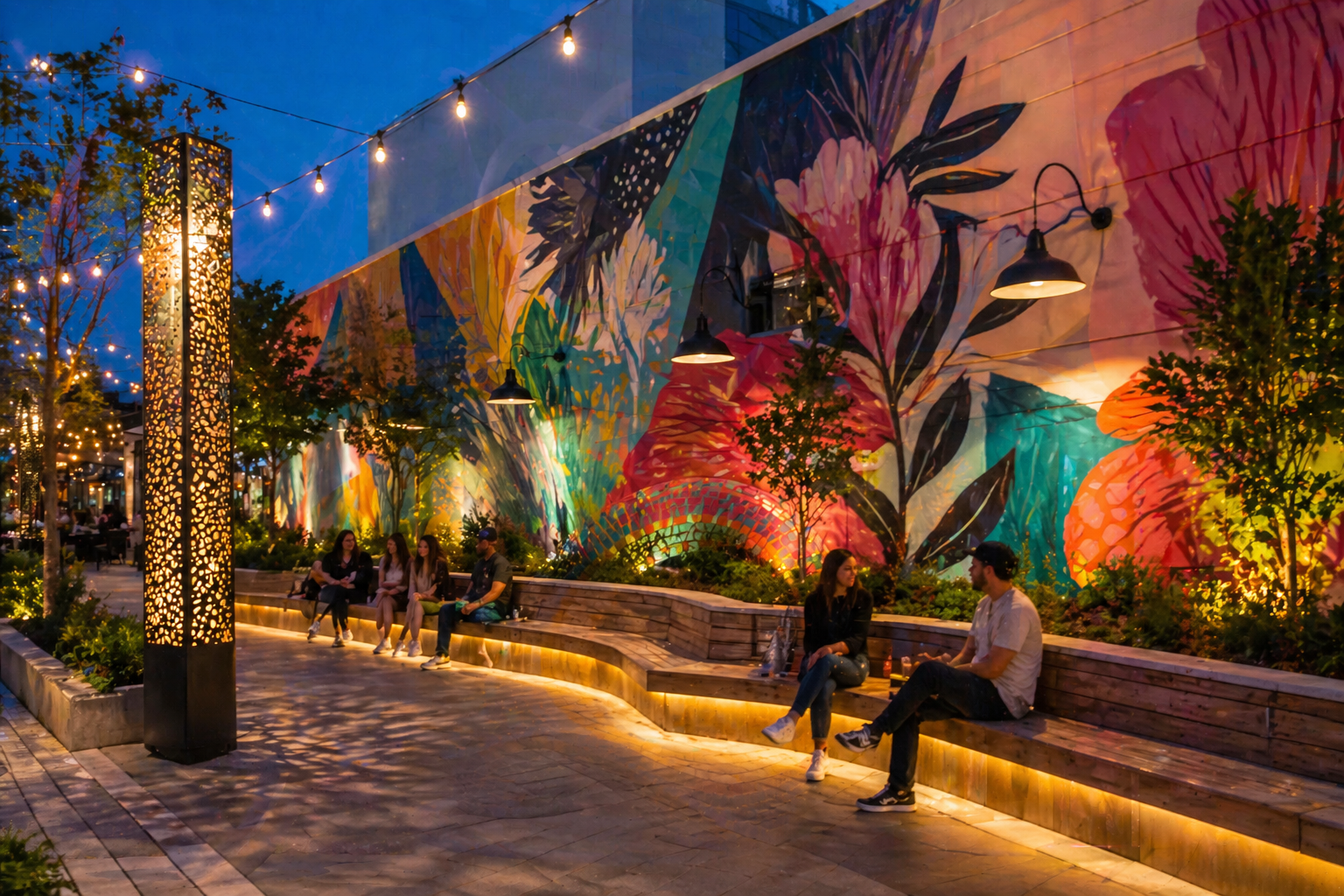
Public art has evolved far beyond murals and standalone sculptures; in today’s real estate environment, it operates as a strategic tool that sits at the intersection of design, infrastructure, and asset performance. Particularly within retail and mixed-use properties, public art is increasingly being deployed not simply to enhance aesthetics, but to serve functional purposes that directly influence how people move through, experience, and ultimately spend time—and money—within a property. When executed thoughtfully, public art becomes an embedded component of the built environment, contributing both operational utility and measurable economic value.
At its core, public art refers to any creative work installed in spaces accessible to the public, whether owned by municipalities or private entities. In the context of privately owned real estate, especially retail centers, public art is best understood as a form of placemaking infrastructure. It shapes perception, defines identity, and differentiates an asset within a competitive market. However, the most effective applications are those that integrate functionality into artistic expression, transforming everyday property elements into experiential features.
Functional public art is particularly relevant in this regard. Elements such as seating, lighting, shade structures, and wayfinding systems can be designed with artistic intent while serving critical operational roles. Sculptural seating, for example, provides necessary rest areas while encouraging dwell time—an essential driver of retail performance. Thoughtfully placed seating near food and beverage tenants can increase customer linger time, which correlates with higher sales volumes. Similarly, artistic shade structures are not merely visual enhancements; in climates such as Florida, they materially improve usability of outdoor spaces by mitigating heat and sun exposure. This, in turn, supports outdoor dining, pedestrian comfort, and extended visitation.
Lighting installations represent another intersection of function and art. Beyond their visual appeal, they provide safety, improve visibility, and extend the usable hours of a property into the evening. Properties that successfully activate nighttime environments often see increased traffic for restaurants and entertainment uses, strengthening overall tenant performance. Wayfinding systems, when designed as artistic features, also contribute significantly to operational efficiency. Clear, visually engaging signage reduces friction in navigation, improves customer flow, and ensures that tenants benefit from proper visibility and access.
Despite these advantages, public art introduces a series of considerations that property owners and managers must address with discipline. One of the most immediate concerns is maintenance. Unlike standard building components, public art often requires specialized care, and exposure to weather, particularly in coastal markets like St. Petersburg, accelerates wear and deterioration. Without proper maintenance planning and budgeting, installations can quickly transition from an asset to a liability, negatively impacting the property’s image.
Liability is another critical factor. Interactive or accessible art elements can introduce safety risks, ranging from climbable structures to trip hazards embedded within design features. These risks require careful coordination with insurance providers, engineers, and legal teams to ensure compliance and adequate coverage. Additionally, the subjective nature of art presents reputational risks. What resonates with one demographic may alienate another, particularly if installations are perceived as controversial or misaligned with the property’s tenant base or brand positioning.
Operational conflicts may also arise. Public art integrated into façades or common areas can interfere with tenant signage, sightlines, or circulation patterns if not carefully planned. Furthermore, the presence of highly engaging installations can attract non-customer traffic, increasing the need for security and active management of public spaces. Ownership and control present another layer of complexity, especially when art is commissioned in collaboration with municipalities or third-party organizations. Without clearly defined agreements, responsibility for maintenance, repair, or removal can become ambiguous.
There is also the broader economic dynamic to consider. Public art is often associated with neighborhood revitalization and increased investment, which can lead to rising property values. While this is beneficial from an ownership perspective, it can contribute to gentrification pressures, potentially creating tension within the surrounding community. For property managers, this underscores the importance of aligning public art strategies with both asset goals and community context. Even with these challenges, the overall benefits of public art in private real estate are significant when approached strategically. Public art enhances placemaking, transforming properties from transactional environments into destinations. It strengthens branding by creating a distinct identity that is memorable and marketable. In leasing, it serves as a differentiator, helping attract tenants that prioritize experience-driven locations, particularly in sectors such as food and beverage, fitness, and boutique retail.
From a financial perspective, the value of public art is often indirect but impactful. Increased foot traffic, longer dwell times, and improved customer experience contribute to stronger tenant sales, which in turn supports rent growth and occupancy stability. Properties that successfully integrate functional public art are better positioned to compete, particularly in urban and infill markets where experiential quality is a key driver of demand.
Ultimately, public art should not be viewed as an afterthought or purely aesthetic enhancement. Within the private property market, it is most effective when treated as a strategic component of asset management—planned, underwritten, and maintained with the same rigor as any other capital investment. When art is functional, aligned with the property’s identity, and supported by proper operational planning, it becomes a powerful tool that enhances both the physical environment and the financial performance of a real estate asset.