From Chaos to Clarity: Reconstructing a CAM Reconciliation Midstream
Cornerstone Realty Management · February 20, 2026
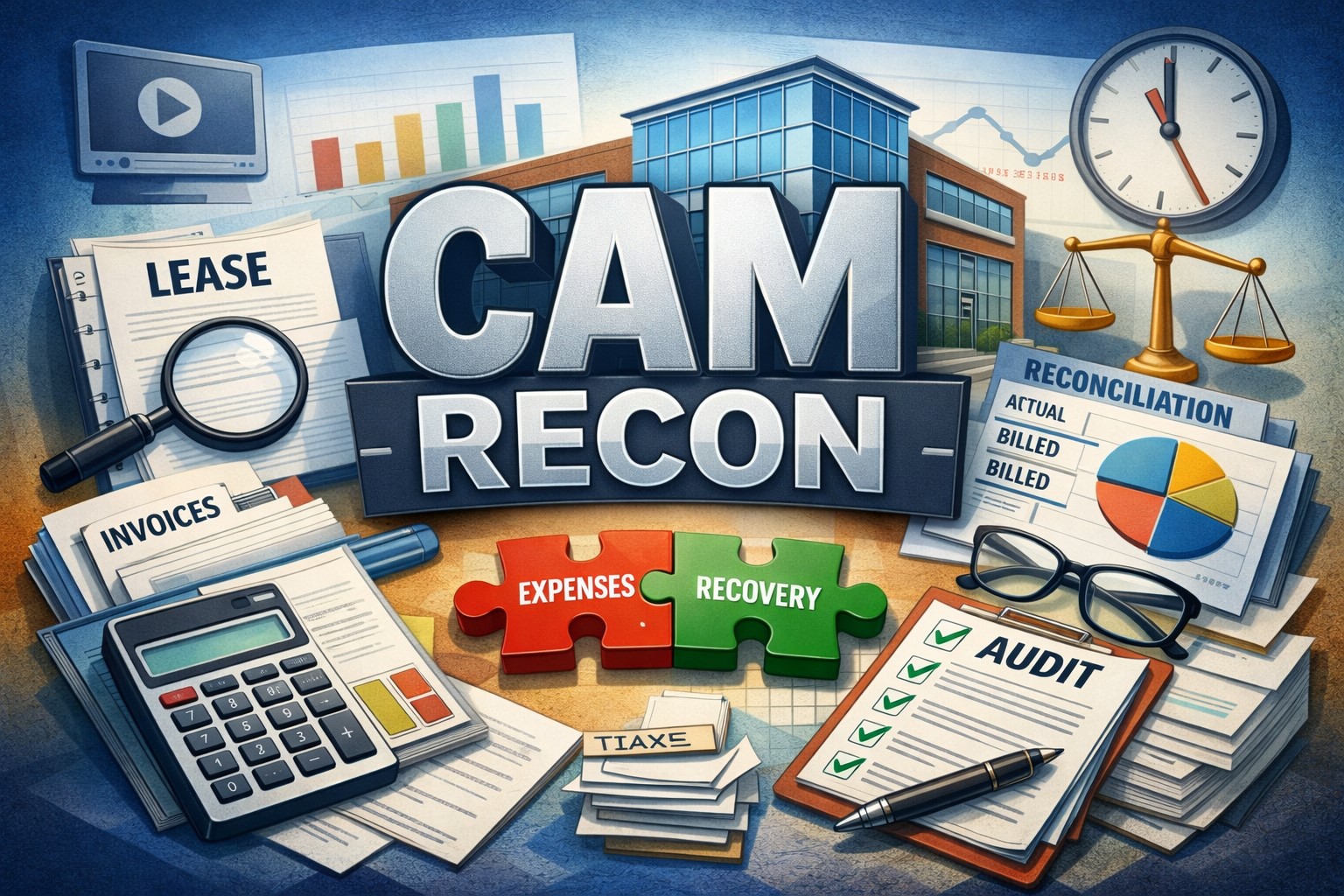
OK — so you’ve been assigned to complete the 2025 CAM reconciliation for a property you began managing less than six months ago. Where do you begin? What information and data do you need to start the process? The objective is to reconstruct the full-year story with defensible numbers.
The first and most critical step is to review the leases if you have not already done so. Your reconciliation will only be as accurate as your lease interpretation. Each lease should be analyzed to identify CAM inclusions and exclusions, the lease structure (whether gross, NNN, or modified gross), and any caps on controllable or non-controllable expenses. You should also confirm the administrative fee percentage and carefully verify whether the admin fee applies to all CAM line items or only certain categories. Pay close attention to reconciliation deadline requirements, as some leases strictly limit the timeframe in which you can bill tenants.
The second step is to review the prior manager’s financial package, since you will need historical support to complete the process properly. At a minimum, you should obtain the 2025 financial statements, the full-year general ledger, the trial balance, the 2025 budget that was used for tenant billings, the tenant CAM billing schedule, vendor contracts, real estate tax bills, and insurance invoices. It is also extremely helpful to obtain the 2024 CAM reconciliation to compare for consistency and identify any unusual variances. If information is missing, document your requests and follow-ups so there is a clear record.
Once the data is gathered, it is time to rebuild the CAM expense pool. It is very common to find errors in how invoices were processed, especially during a management transition. Review every general ledger line coded to CAM and confirm that each expense is truly recoverable under the leases. Any non-CAM or non-recoverable items should be reclassified. Remove all capital expenditures unless the lease specifically allows amortization of certain capital items. Where amortization is permitted, confirm the useful life and determine the correct year of recovery. You should also validate the classification of repairs and maintenance versus capital items and confirm that insurance and real estate tax allocations are accurate.
After the expense pool is clean, you can begin reconciling tenant billings to actual costs. Confirm each tenant’s pro rata share, verify the square footage, and review billing start and stop dates for move-ins, terminations, and any rent commencements. Compare the estimated CAM billed during the year to the actual CAM due and calculate the under- or over-recovery for each tenant. This is also the stage where common errors tend to surface, including incorrect suite sizes, missed billing stops, improper gross-ups, or misapplied administrative fees.
Throughout the process, documentation is essential. When you are reconstructing a year with incomplete information, you must clearly record any assumptions, lease interpretations, and reclassifications that were made. A well-written reconciliation memo can protect both the manager and the ownership group if questions arise later.
CAM reconciliation is rarely easy, and inheriting one midstream can feel overwhelming. However, with a disciplined lease review, a careful rebuild of the financials, and a methodical tenant true-up, even a messy file can be turned into a clean, defensible reconciliation. The goal is not perfection — the goal is a well-supported, lease-compliant, audit-ready story of the year.